1 for safe, 10 for unsafe
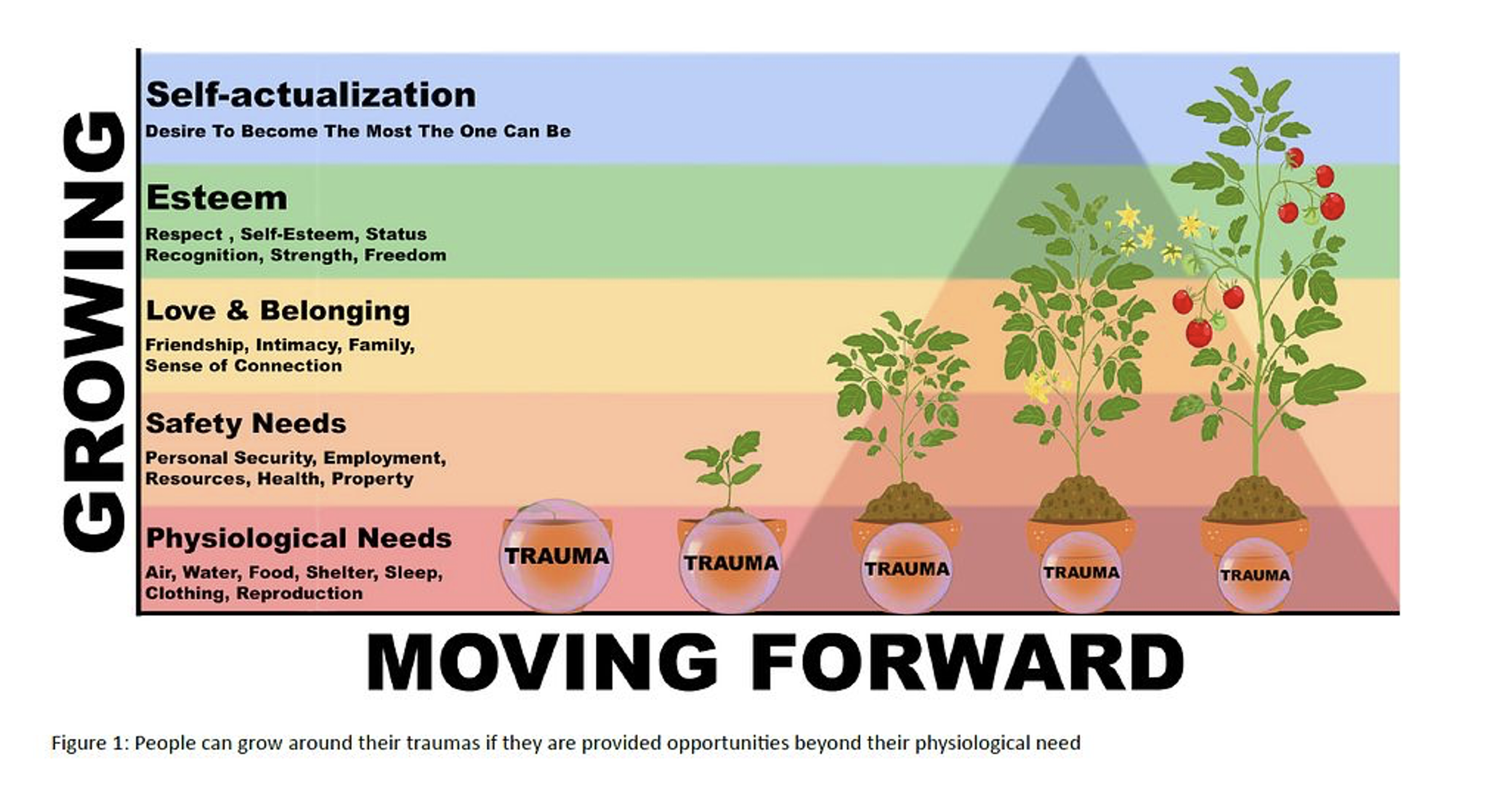
The See Me North story started in 2023, when we started working with people with lived experience of homelessness (PEH). A year later, we co-wrote a blog post. As a group, we had questioned the wisdom of Maslow’s hierarchy of needs, as while homelessness presents a definite and immediate threat to physiological (shelter, food, etc) and safety (resources, health) needs, it was always experienced as the visible tip of an iceberg of difficult experiences, which had stripped people of much more. Love and belonging are often inexistent, esteem severely lacking, and because of that and prevailing alienating systems and people, PEH nearly always lack opportunities for self-self-actualisation. In parallel to thinking about need in a less hierarchical way, we proposed a model of trauma whereby people are not expected to ‘get over’ their trauma, but instead grow around it, not just be increasing self-esteem but by growing their lives and social circles too.
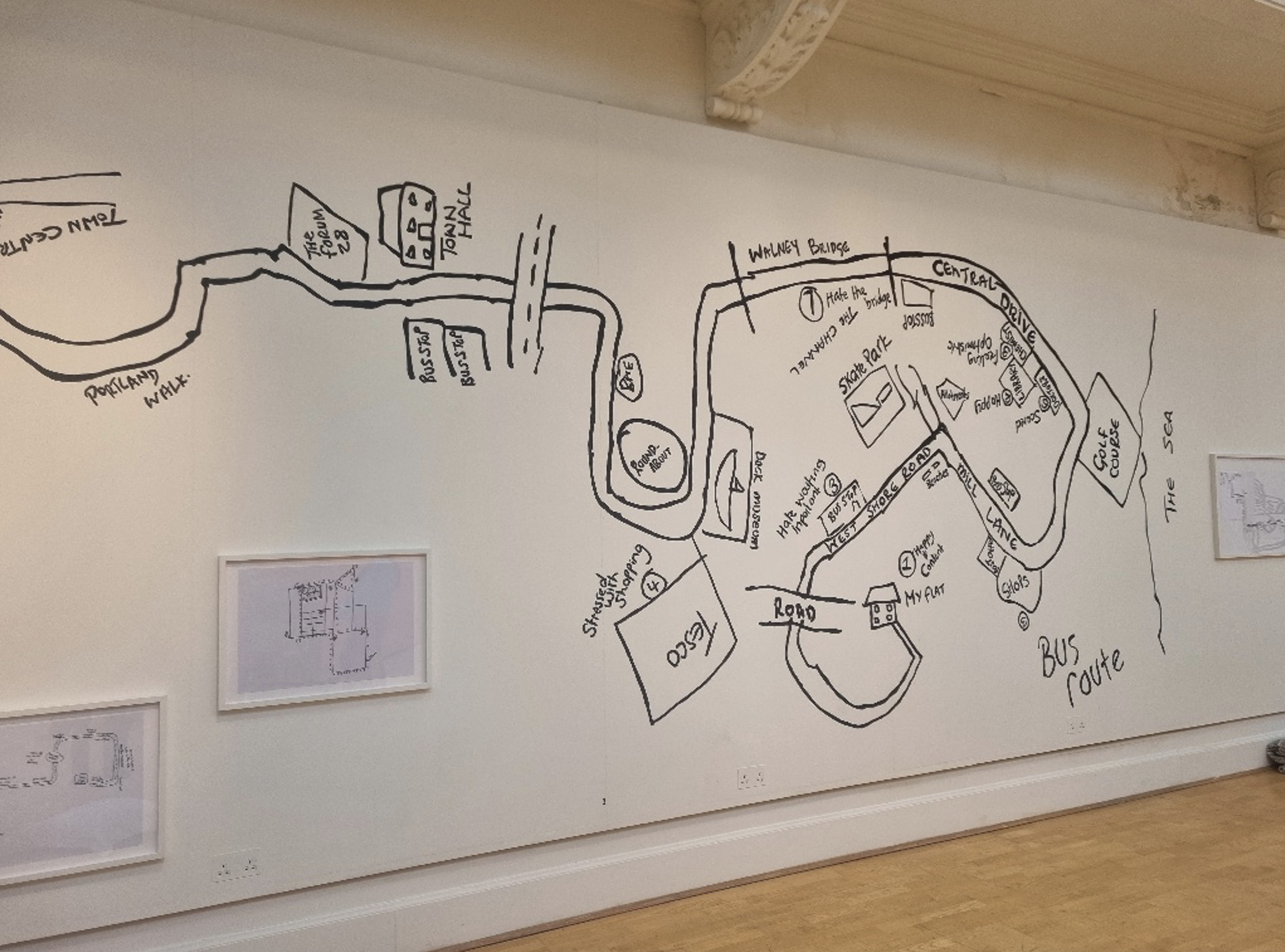
Fast forward nearly three years, and earlier this month, we have opened our first See Me North exhibition, ‘Experts in Transient Living’, in Barrow in Furness. Six PEH had worked with an artist to create pieces of work that in some way, challenged homelessness stigma. They told their stories in a way that was meaningful to them, and incredibly evocative to view. One piece which particularly struck me was a large map on the wall. It detailed places in the local town that the artist visited regularly. That, in an of itself, was an interesting portrayal of a life in a place. But what was most striking was that places had been allocated a safety rating. 1 for safe; 10 for unsafe.
I cast my mind back to our model of trauma and the ability to grow around it to reach greater self-esteem and actualisation. What are we trying to achieve in See Me North? We are establishing physiological reasons for including community and creative spaces in the carescape for PEH. However, I wonder whether creative and community spaces are also providing something else. They are providing spaces that are inherently safe. Safe from high stakes demands. Safe from judgement. Safe from the need to perform and behave in certain ways. That safety isn’t limited to what Maslow described (personal security, employment, resources, health, property,) but includes the feeling of being safe relationally (being with trusted people) and occupationally. By the latter I don’t mean in a health and safety way, though physical safety is crucial too of course, but feeling safe that one’s decisions cannot carry dire consequences. Creativity offers a space where there are no expectations, therefore one might be able to simply be. Not perform, not achieve, not behave, not plan or project, but be. Providing affordances to rediscover who one is, what one can do and what that might become through the medium of play and creativity, where no one can question one’s interpretations. Much more to mull over about this. Safety to be. Safety to exist. Safety to create. This feels like a basic human right, which many PEH don’t have access to.