Roots and Recognition: What the forest taught us about being connected.
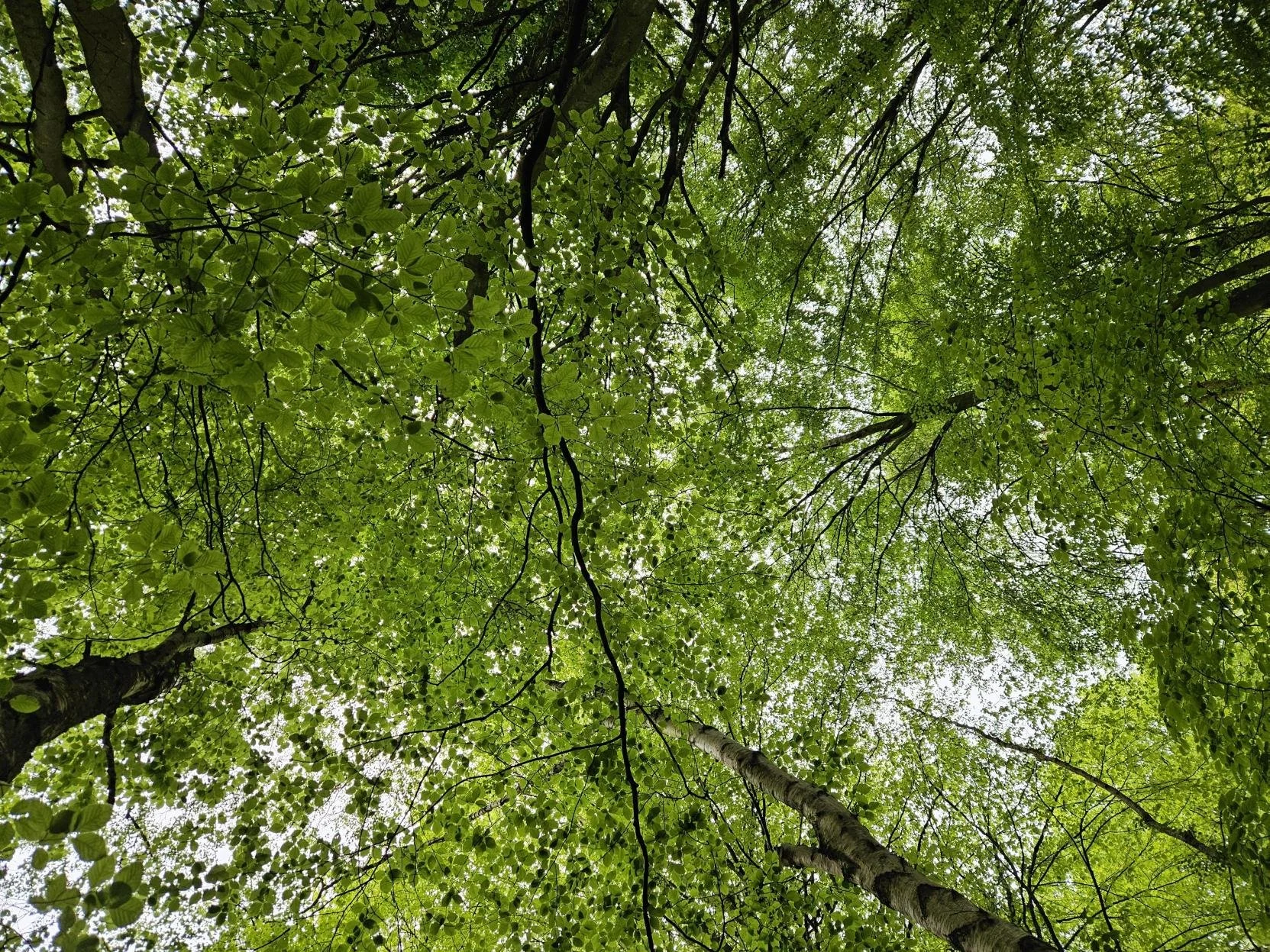
A morning among the trees of Gibside and what the wood wide web reveals about connection, disconnection and reconnection.
Beneath every forest floor, invisible to the eye, runs a network of fungal threads, known as the mycorrhizae a mutually beneficial symbiotic association which links tree to tree and root to root. Scientists call this a mutualistic system. Trees share nutrients and knowledge through it. They send warning signals and information. In times of drought, the older trees quietly feed the younger ones. Nothing in the forest survives entirely alone. Everything is, in some way, held.
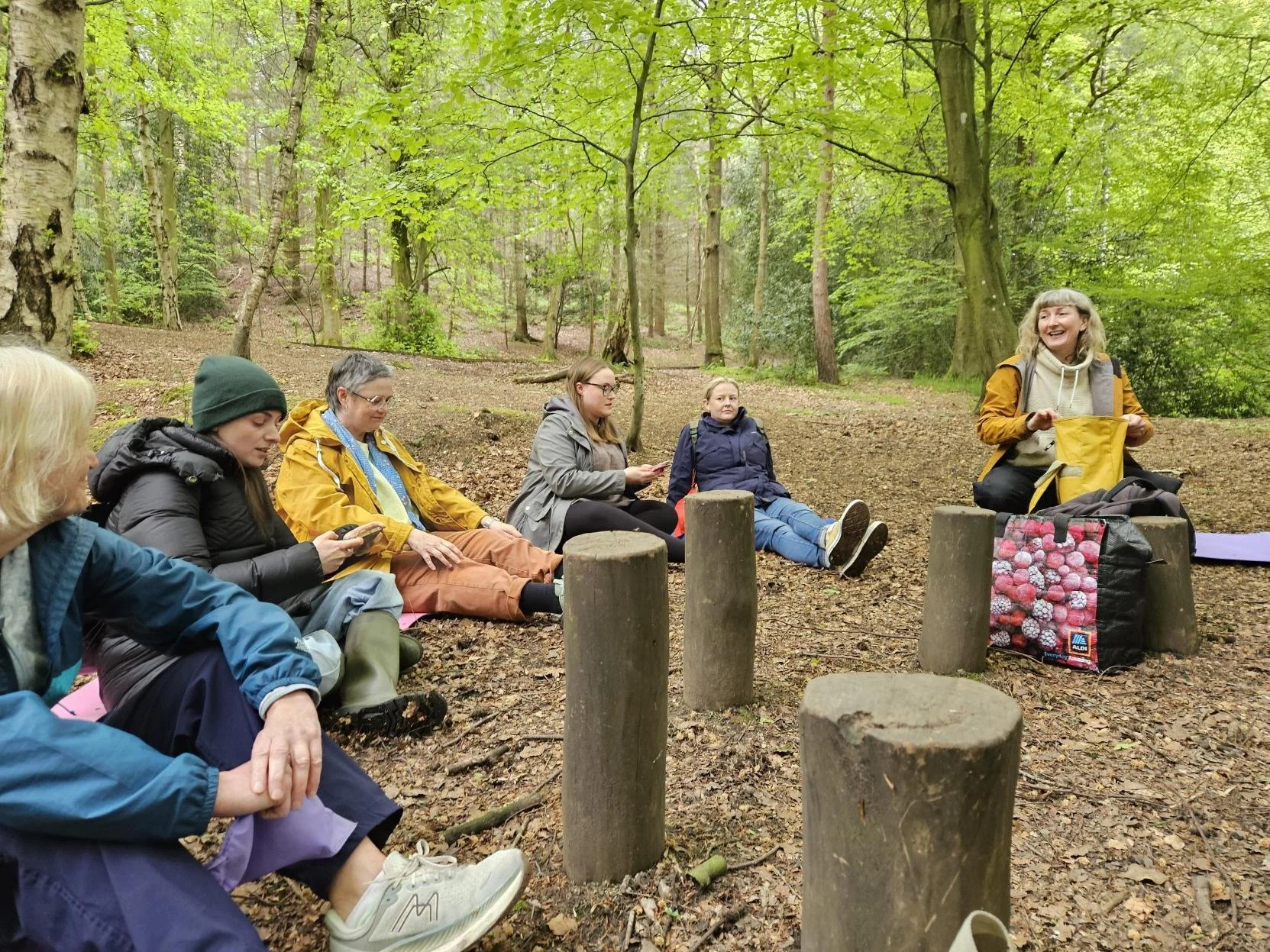
We thought about that a lot during our recent blossom bathing session, although blossom was absent, we spend a morning in quiet reflection among the trees with colleagues and a group of people who have experienced homelessness firsthand. Homelessness is rarely just about the absence of a roof. It is, at its core, a severing from threads of stability, safety and from the ordinary rhythms that tether us to a sense of self, ultimately resulting in disconnection and rejection. The relationships that most of us take for granted, a neighbour that knows your name, a routine that marks your days, a place you can call your own becomes uncertain, insecure, unsafe or can disappear entirely.
In the language of the mycorrhizal network, this is what it looks like when a tree is isolated from the web, cut off from the shared system of signal and nourishment. It can survive for a while on its own reserves. But it is depleted. It is more vulnerable, held back from reaching it’s full potential, crucially, it is no longer connected to the forest around it.
The stigma that surrounds homelessness deepens this disconnection. When society views someone without a home and sees only a problem to be managed as opposed to a person with a history, a voice, and something to offer, another thread is severed. Not just the thread to services or support. The thread to be seen as fully human and a valued part of the wider network.
Shinrin-yoku, or forest bathing, is the Japanese practice of immersing yourself in nature to promote physical and mental wellbeing. Forest bathing asks nothing of you, you do not hike or achieve or conquer. You simply allow yourself to be present in order to connect to a living place. You notice the sound of the wind, the way the light falls through the leaves, the smell of the ground after the rain. You let your nervous system remember that it belongs within a larger world. That day, something shifted. Not immediately, and not for everyone in the same way. But there were moments, collecting leaves from the forest floor, sharing nettle tea, someone naming aloud what they could smell, a shared and stifled laugh at a bird obnoxiously chirping nearby, where the air between people changed. Where the boundaries that usually separate “professional” from “participant”, “helper” from “helped”, softened a little. The forest does not ask for your history before it lets you in. The blossom falls on all of us, equally. As we sat amongst the trees, we heard the following poem read aloud.
You are nature
There is a reason why walking amongst nature is most people’s best advice when depression strikes.
Because walking in nature is a return to ‘home’.
You are not a lover of nature, or a fan of nature, you ARE nature.
You are as much nature as the trees in your garden and the bees on your picnic.
You were designed to live your days out in the wild with your fellow creatures and plants but progress, humanity, had different plans for us all.
And so we exist day-to-day, in our homes, but never ‘home’.
The quickest route back to self, to inner peace, is bare feet on grass, arms around trees, head in the clouds and heart in a forest.
Put your weary bones in water, whenever you can, smell each flower you see and crumble dirt between your tired-of-typing fingers.
You are nature, go home once in a while.
It will bring you much you didn’t even know you were missing.
This poem is by Donna Ashworth, featured in her book ‘Wild Hope’ see the following link to get a copy https://amzn.eu/d/2j0Nquu
In the mycorrhizal network, reconnection is not dramatic. A severed root does not suddenly burst back into the system. It is gradual, a slow re-threading, a tentative exchange of nutrients, a building of trust between organisms that takes time and the right conditions. The forest does not rush.
We believe that creative activities like this one offer something similar, not a solution, but a condition. A state in which re-threading can become possible. Where someone who has been told, explicitly or implicitly, that they do not belong, can begin to feel the ground beneath them again. Where the act of noticing something beautiful, together, becomes a small but real act of belonging and reconnection. That, we think, is where stigma begins to loosen. Not within a policy document, although those matter. But in the small, embodied moments when two people stand beside the same tree, free the same breeze and listen to the same stream, with neither one being the expert and neither one being the problem.
One thing ecologists note about the mycorrhizal network is that it has a memory. Older trees hold memories within their root system an accumulated knowledge and wisdom of the forest. They have weathered drought, disease and storms time and again. They use their deep connections not to dominate, but to sustain. They are, in a sense, repositories of survival.
The people who joined us that morning carry an accumulated knowledge and wisdom too. The Experience of homelessness is a form of knowledge that most of us will never have. Understanding what it means to be truly without, and what small gestures of humanity can mean in that darkness. That wisdom has value. Our project exists, in part to create spaces where it can be heard. And ultimately, help foster reconnection.